A seamless microcement kitchen floor installed directly over existing tiles, preserving the electric underfloor heating system while creating a modern, durable and low-maintenance finish.
Before & After Transformations
Before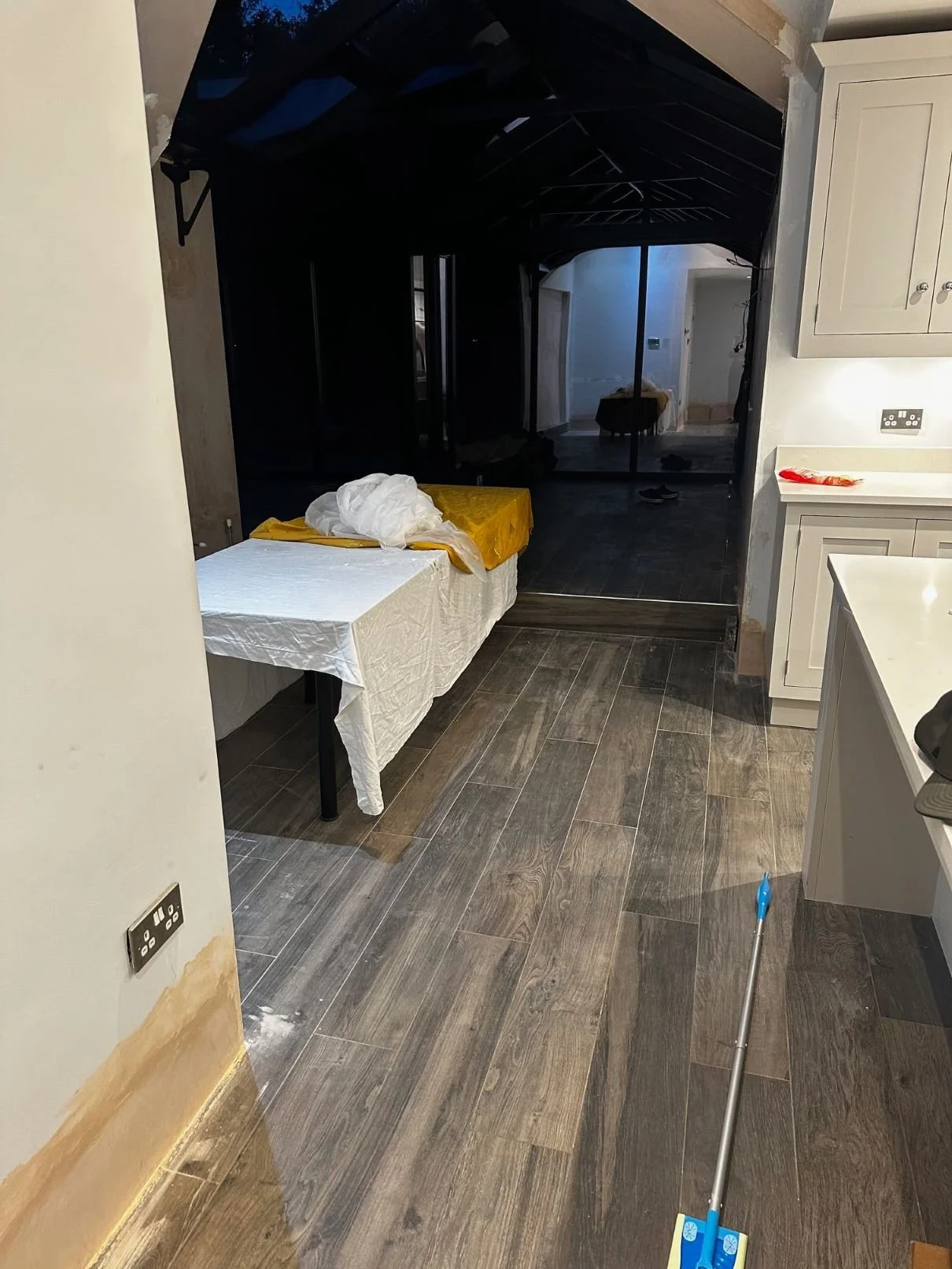
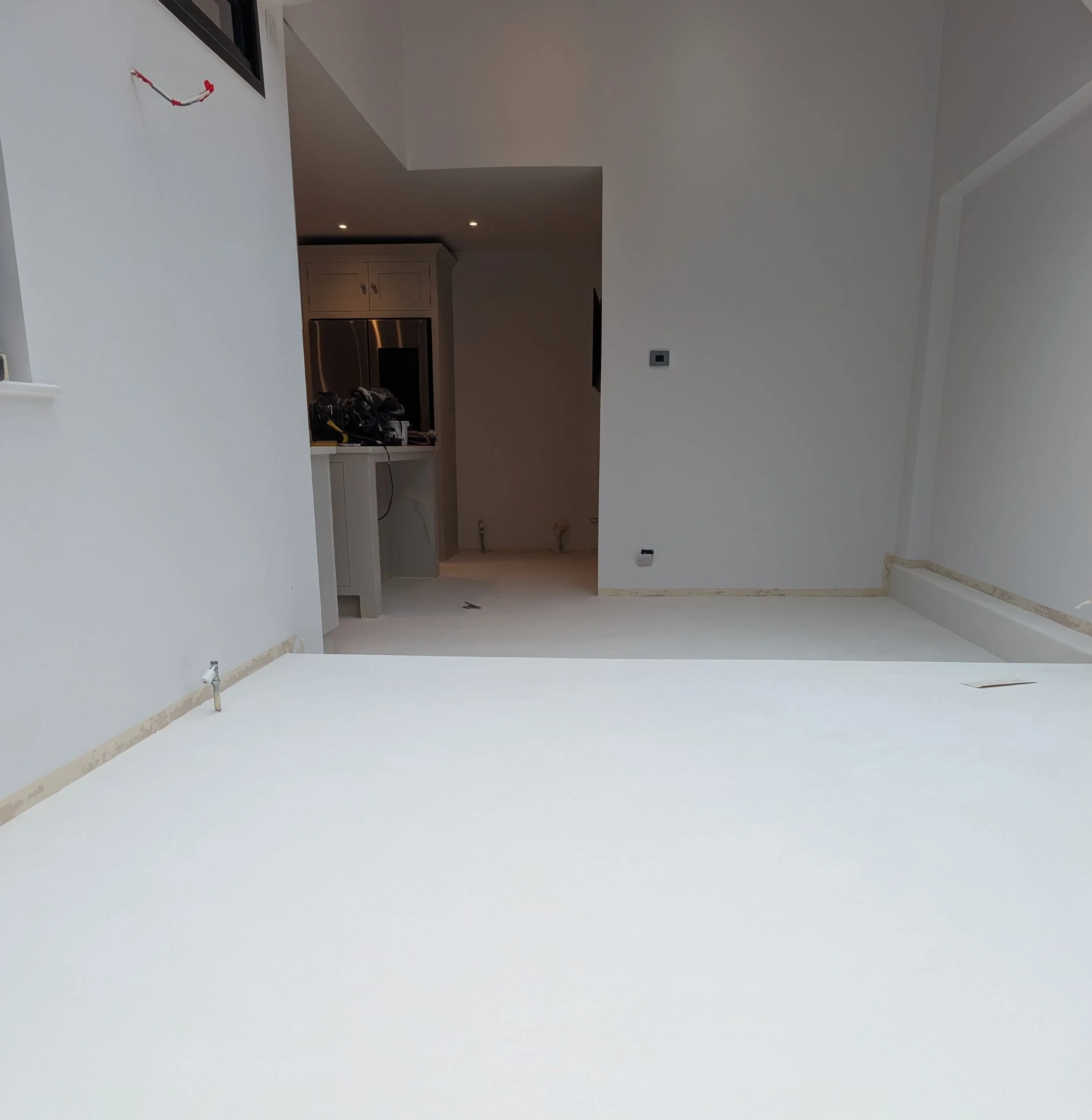
After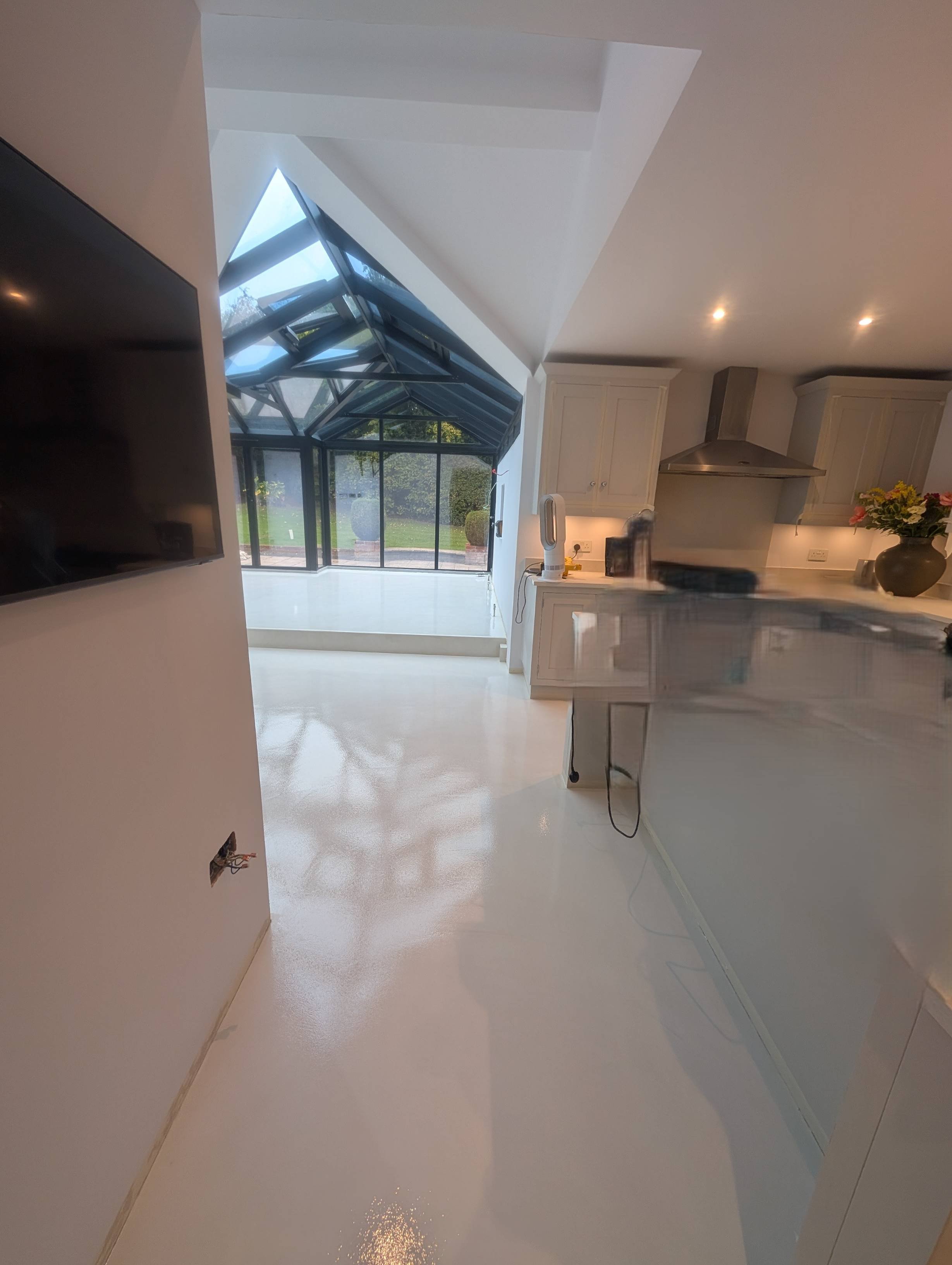
2. Project Overview

Location
Beaconsfield, England

Surface
Kitchen & Dining flooring

Finish
Microcement

Scope
40 m²

Duration
6 days
3. The Challenge
The existing kitchen floor featured electric underfloor heating beneath the tiled surface, making tile removal a high-risk process that could potentially damage the heating system. The goal was to modernise the flooring while preserving the existing underfloor heating and avoiding unnecessary disruption.
4. The Solution
Instead of removing the original tiles, the existing surface was carefully prepared and reinforced before applying a seamless microcement flooring system directly over the top. This approach protected the electric underfloor heating installation while providing a durable and modern flooring solution without invasive demolition work.
5. The Results
The finished kitchen floor was transformed with a seamless microcement surface that refreshed the entire space while preserving the fully functional electric underfloor heating system. The renovation delivered a modern, durable, and easy-to-maintain finish with minimal disruption and no risk to the existing heating infrastructure.
6. Key Benefits

Seamless Finish
No grout lines, clean and modern look

Installed Over Tiles
Applied directly over the existing tiled surface, avoiding full floor removal.

Heating Protected
Reduced the risk of damaging the electric underfloor heating beneath the tiles

Minimal Disruption
Modernised the kitchen floor without invasive demolition or major disruption.
7. F.A.Q
-
Yes. Microcement can often be applied over existing tiles if the tiled surface is stable, well-bonded and correctly prepared. In this Beaconsfield kitchen project, applying microcement over the tiles helped avoid unnecessary demolition.
-
Yes, in many cases. If the underfloor heating system is beneath the existing tiles, microcement can be a practical option because it avoids tile removal and reduces the risk of damaging the heating cables.
-
The existing floor had electric underfloor heating underneath the tiles, so removing them carried a risk of damaging the system. Microcement allowed the floor to be modernised while preserving the heating and keeping disruption to a minimum.
Planning a similar project?
We specialize in in microcement bathrooms, floors and walls. Get in touch for a free quote.